Skip to content
Babussalam.pk is a Largest online Islamic store in Pakistan providing Authentic Islamic books. For Order/Info Please Call / WhatsApp us on 0305 4411666.
Teaching Your Child to Read the Quran: Qaida to Nazra, Step by Step

Teaching Your Child to Read the Quran: Qaida to Nazra, Step by Step

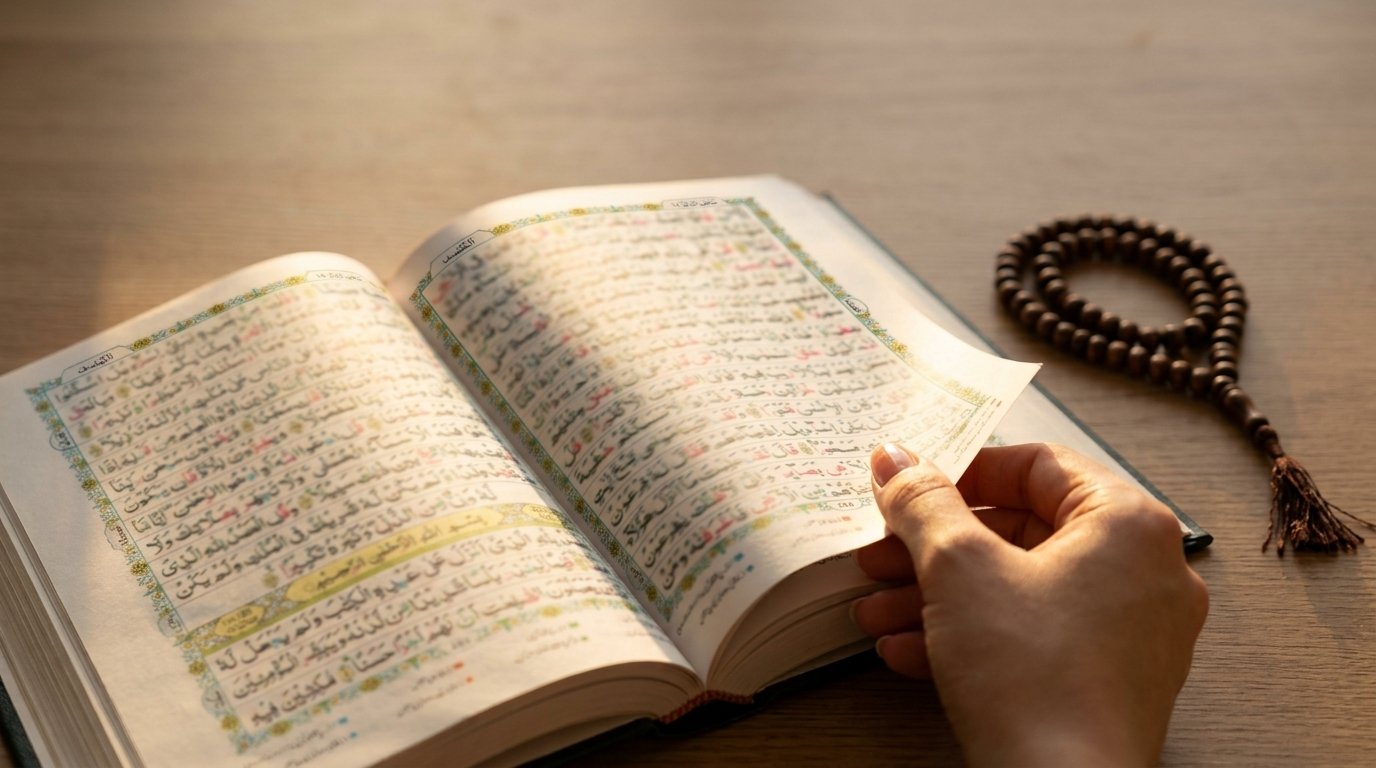
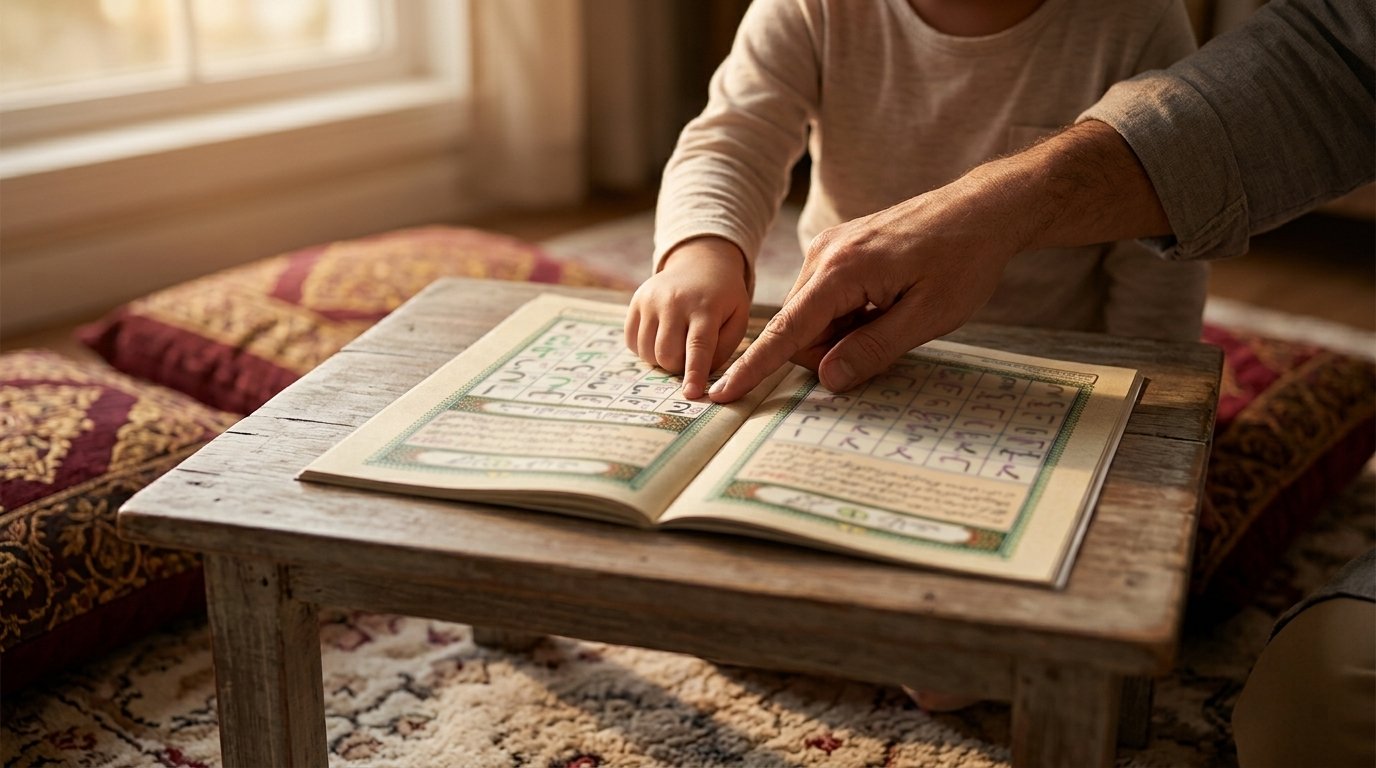
Teaching a child to read the Quran at home is very doable. It does not need a special room or long lessons. It needs a simple plan, the right first book, and short, regular sessions. This guide gives you that plan, with realistic timelines and gentle methods for young children.

When should a child start?

There is no single correct age. As a rough guide:

  • Ages 3 to 4: informal exposure only. Point at letters, say their sounds, let the child trace shapes. Keep it playful.
  • Ages 4 to 6: a proper Qaida can begin, in very short sessions of 5 to 10 minutes.
  • Ages 6 to 8: most children can work through a Qaida steadily and start nazra (reading from the Mushaf).
  • Older starters: an older child or teen moves through the Qaida faster and can begin nazra within months.

Every child is different. A child who is not ready will resist and lose confidence. It is better to wait a few months than to push too early.

The stages, in order

Stage 1: Pre reading (letter shapes and sounds)

Before formal reading, the child should enjoy handling Arabic letters. Tools that help:

  • A Tamheedi Qaidah or art card that introduces letters with large, clear shapes and colour.
  • A Tracing Quran Workbook, where the child traces letters and words with a pencil. This builds the hand movement and the memory of letter shapes at the same time.

Keep this stage light. The goal is comfort with the letters, not speed.

Stage 2: The Qaida (letters, forms, vowels, joining)

The Qaida is the core of learning to read. A good Qaida moves in small steps:

  1. The 29 letters and their sounds.
  2. The shapes of each letter at the start, middle and end of a word.
  3. Short vowels (zabar, zer, pesh).
  4. Tanween (the "an, in, un" endings).
  5. Long vowels and the letters of madd.
  6. Sukoon (a letter with no vowel) and joining letters together.
  7. Special rules: shaddah (doubling), and simple stopping.

The Qurani Qaidah and the Noorani Qaida are the two most used. A tajwedi version marks the basic recitation rules early, which saves relearning later. Iqra Part 1 is another common first book.

How to run a Qaida session:

  • Keep it to 5 to 15 minutes, once or twice a day.
  • Start every session by revising the last two pages before doing anything new.
  • The child reads out loud. You listen and correct gently.
  • Do not move to a new page until the current page is easy and fast.
  • End on something the child can do well, so they finish feeling successful.

How long does a Qaida take?

With daily short sessions, many children complete a Qaida in 6 to 12 months. Some take longer. Slower and solid is far better than fast and shaky.

Stage 3: Nazra (reading from the Mushaf)

Once the Qaida is finished and joining is smooth, the child starts reading directly from the Quran. This is called nazra. Begin with:

  • Juz Amma (the 30th part), because the surahs are short and the child may already know some by heart.
  • A clear, bold Mushaf with a layout that is easy on young eyes. See our guide on choosing a Mushaf.

Keep correcting sounds as they read. If mistakes pile up, slow down and revise the relevant Qaida pages.

Stage 4: Tajweed and beyond

As nazra becomes fluent, introduce the tajweed rules properly. Our guide on how to learn tajweed sets out the order. Many families also start basic Quranic word meanings around this age, covered in how to learn Arabic to understand the Quran.
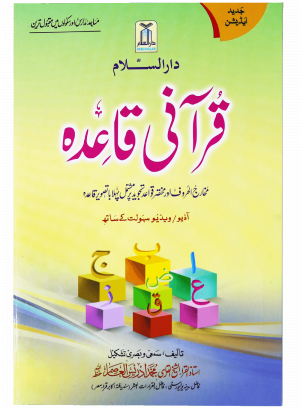
Qurani Qaidah 14X21 قرآنی قاعدہ

Keeping a young child engaged

  • Short and daily beats long and rare. Two five minute sessions are better than one thirty minute session.
  • Praise effort, not just results. "You tried that hard word again" matters more than "correct".
  • Attach it to a routine, such as straight after Maghrib or before a favourite activity.
  • Let them teach you. Ask the child to "check" your reading of a page. Explaining a letter fixes it in their mind.
  • Build love, not just skill. Read a children's book of the Prophet's life or a simple dua book alongside, so the Quran sits inside a wider love for the deen. See best Islamic books for children.
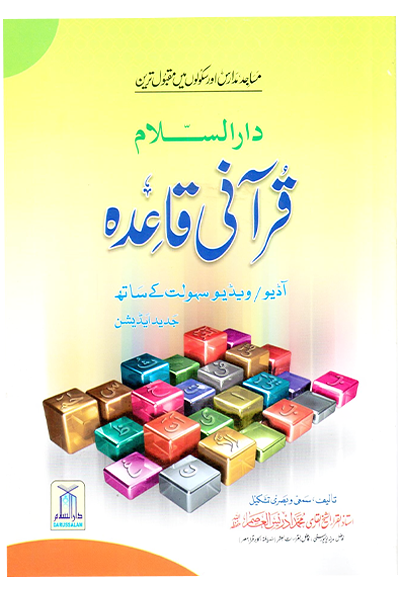
    Qurani Qaidah 17X24 قرآنی قاعدہ
    Qurani Qaidah 17X24 قرآنی قاعدہ

A gentle word on pressure

Children learn the Quran at very different speeds, and that is normal. Comparing your child to a cousin or a classmate usually backfires. A calm, patient parent who keeps sessions short and positive will get a child who reads well and, more importantly, wants to keep reading.

Recommended Books from Babussalam

At the time of writing, the following are listed and, where noted, in stock.

Browse more on the Children category page.

Frequently Asked Questions

At what age should my child start the Qaida?

Most children are ready between 4 and 6 for short sessions, and 6 to 8 for steady progress. Informal letter play can start earlier. Wait if the child is clearly not ready.

How long does it take a child to finish the Qaida?

With short daily sessions, often 6 to 12 months. Some children take longer. A solid, unhurried Qaida makes nazra far easier.

Noorani Qaida or Qurani Qaidah, which is better?

Both teach the same skill. Pick one and stay with it. A tajwedi version is helpful because the child starts applying basic rules early.

Can I teach my child if my own tajweed is weak?

You can teach the Qaida stage well with care. For tajweed and to check pronunciation, arrange a qualified teacher for at least a short period, in person or online.

My child gets bored. What can I do?

Cut the session to five minutes, always revise before new work, end on a success, and attach the session to a daily routine. Boredom usually means the session is too long or the step is too big.

When can my child start nazra?

After the Qaida is finished and joining letters is smooth and quick. Start with Juz Amma using a clear, bold Mushaf.