Teaching Your Child to Read the Quran: Qaida ..
Oct 04 - 2026
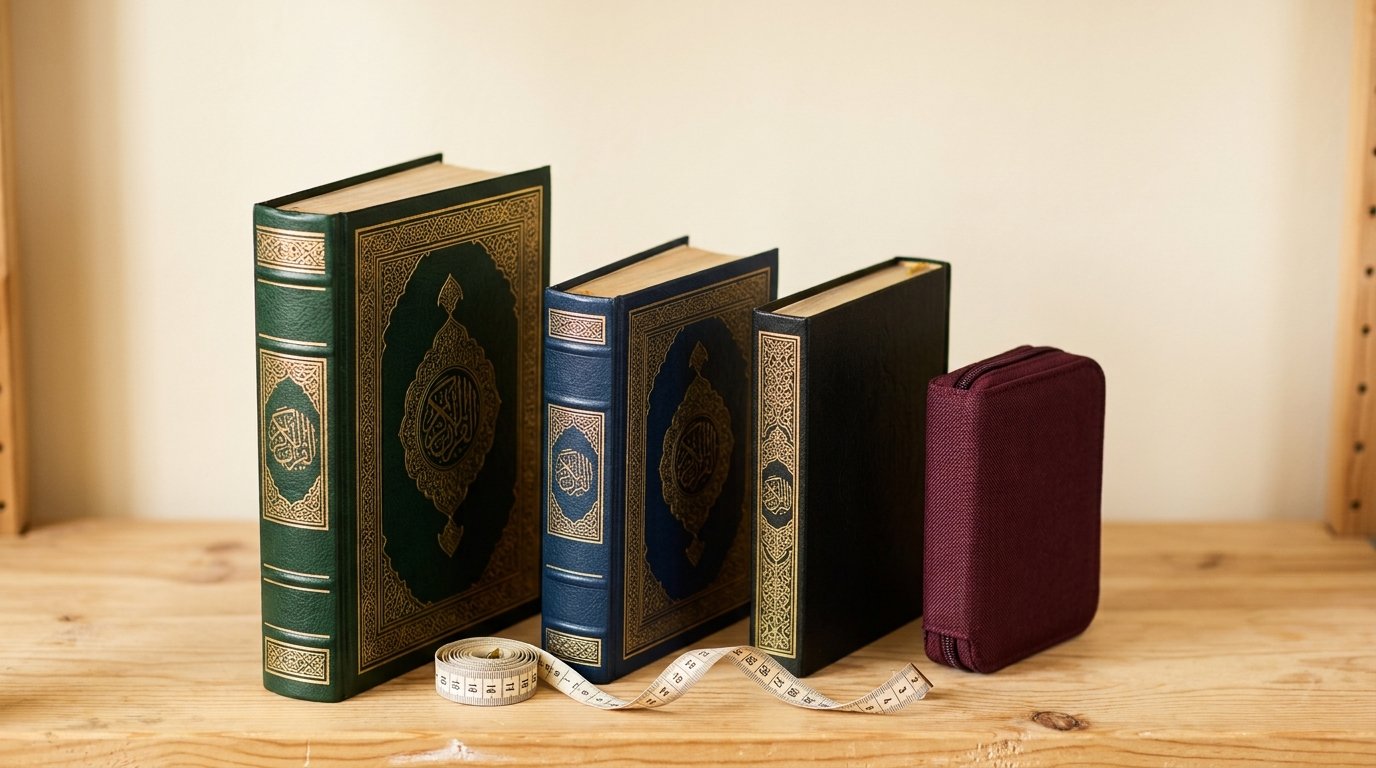
A Mushaf is a printed copy of the Quran in Arabic. When you shop for one, you will see labels like "13 line", "15 line", "16 line", "jumbo", "pocket", and "tajweedi". These are not brand names. They describe the layout and the print. This guide explains what each one means so you can pick the right Mushaf the first time.
Each page has 13 lines. Many people who have memorised the Quran (huffaz) in the subcontinent learned from a 13 line layout, so they prefer to keep reading from the same one. The page image stays fixed in memory, which helps with revision.
Each page has 15 lines. This is a very common layout worldwide. In many 15 line Qurans, every page ends on the end of a verse and every juz (para) starts on a fresh page. This is the layout of the Madinah Mushaf that most people have seen. It is a good default for general reading and for new huffaz who have not fixed on a layout yet.
Each page has 16 lines. This is another traditional subcontinent layout. The text is a little more packed than 15 line, so the book can be slightly thinner, but the letters are smaller.
A tajweedi Mushaf prints certain letters in colour to mark tajweed rules, for example where to stretch a sound (madd) or where a letter is not pronounced. It is a helpful learning aid if you are working on your recitation. Our guide on how to learn tajweed explains how to use one.
Instead of the whole Quran in one book, you can buy a single juz as a thin booklet, or a set of all 30. Schools, mosques and study circles use these so each person can hold one part. The White Para single juz is the best selling item of this kind on Babussalam.
Many Qurans include an Urdu or English translation on the same page. If you want to understand as you read, see our guide on choosing an Urdu translation. If you only want the Arabic for recitation, choose a plain Mushaf.
Some editions come in a hard box or with a protective sleeve, which makes them suitable as a gift for a wedding, Ameen ceremony, or Eid. See our Islamic gift ideas guide for more.
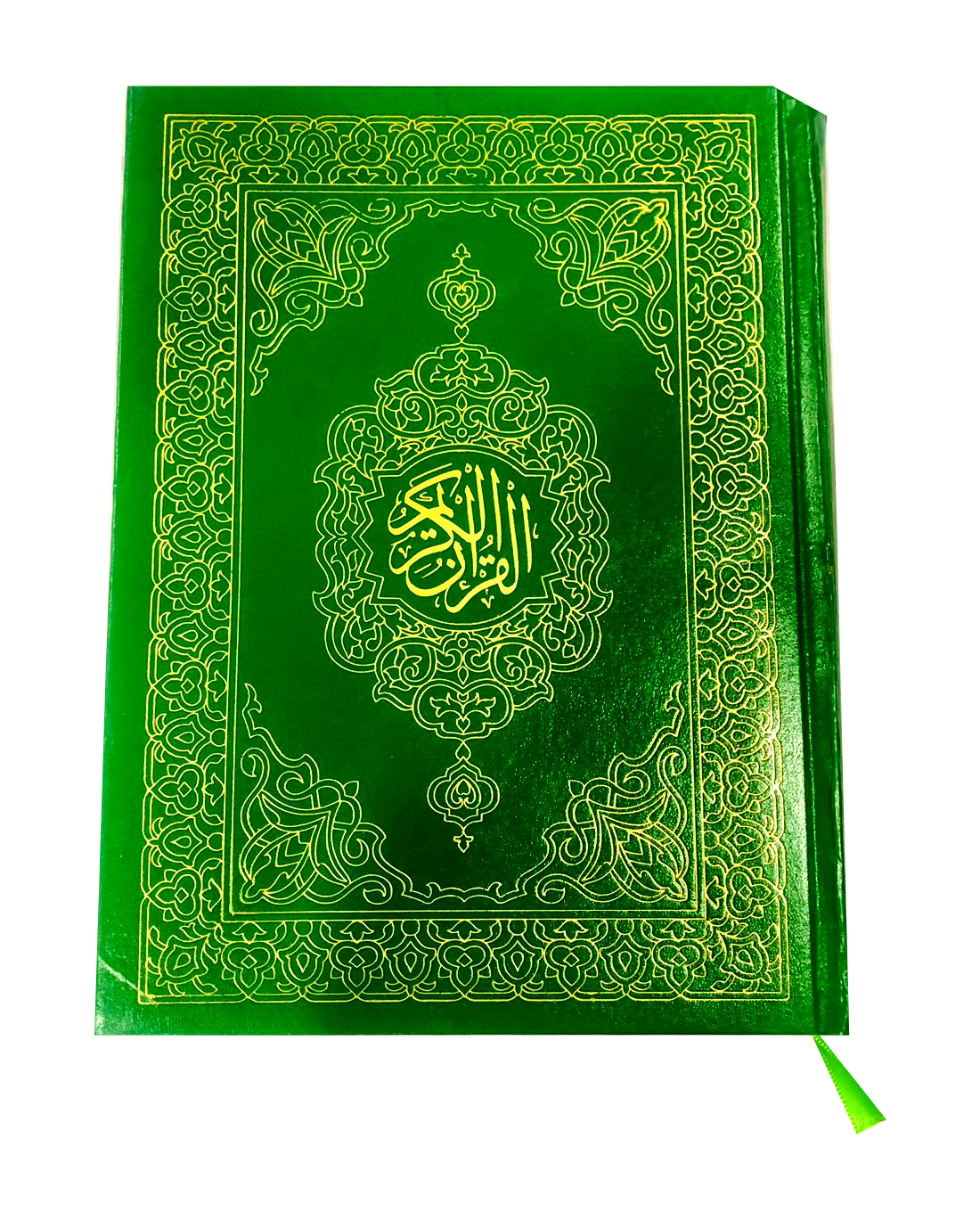
At the time of writing, the following are listed and, where noted, in stock.
Browse the full range on the Quran (Mushaf) category page.
It is the number of Arabic lines printed on each page. A 13 line page has larger, more spaced text. A 15 line page is the layout used in the common Madinah Mushaf, where pages usually end on a complete verse. Huffaz often keep the line count they memorised from.
The one your teacher or institute uses, so the page image stays consistent. In the subcontinent this is usually 13 or 15 line. Ask before buying.
A Mushaf that prints some letters in colour to show tajweed rules, such as where to lengthen a sound or where a letter is silent. It is a learning aid for correct recitation.
If the Quran will be used daily for years, better paper and binding last longer and are easier to read. For a light use or backup copy, a local edition is fine.
A jumbo or large format with bold script. Line count matters less than the overall size of the letters.
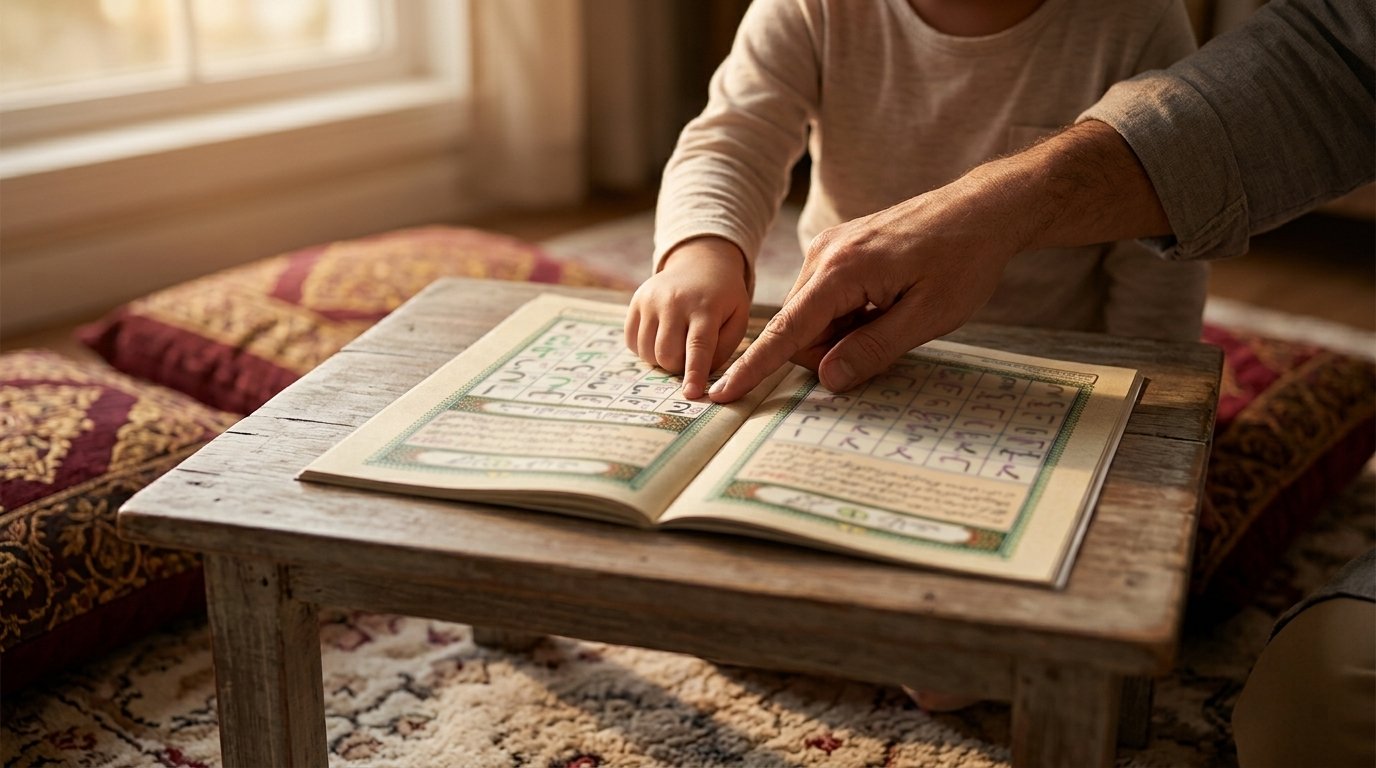
Yes. Children usually start with a Qaida to learn the letters and joining, then move to a full Mushaf for nazra. See our guide on teaching children to read the Quran.
Oct 04 - 2026
Oct 01 - 2026
Sep 26 - 2026

Sep 22 - 2026